Last updated November 21, 2026
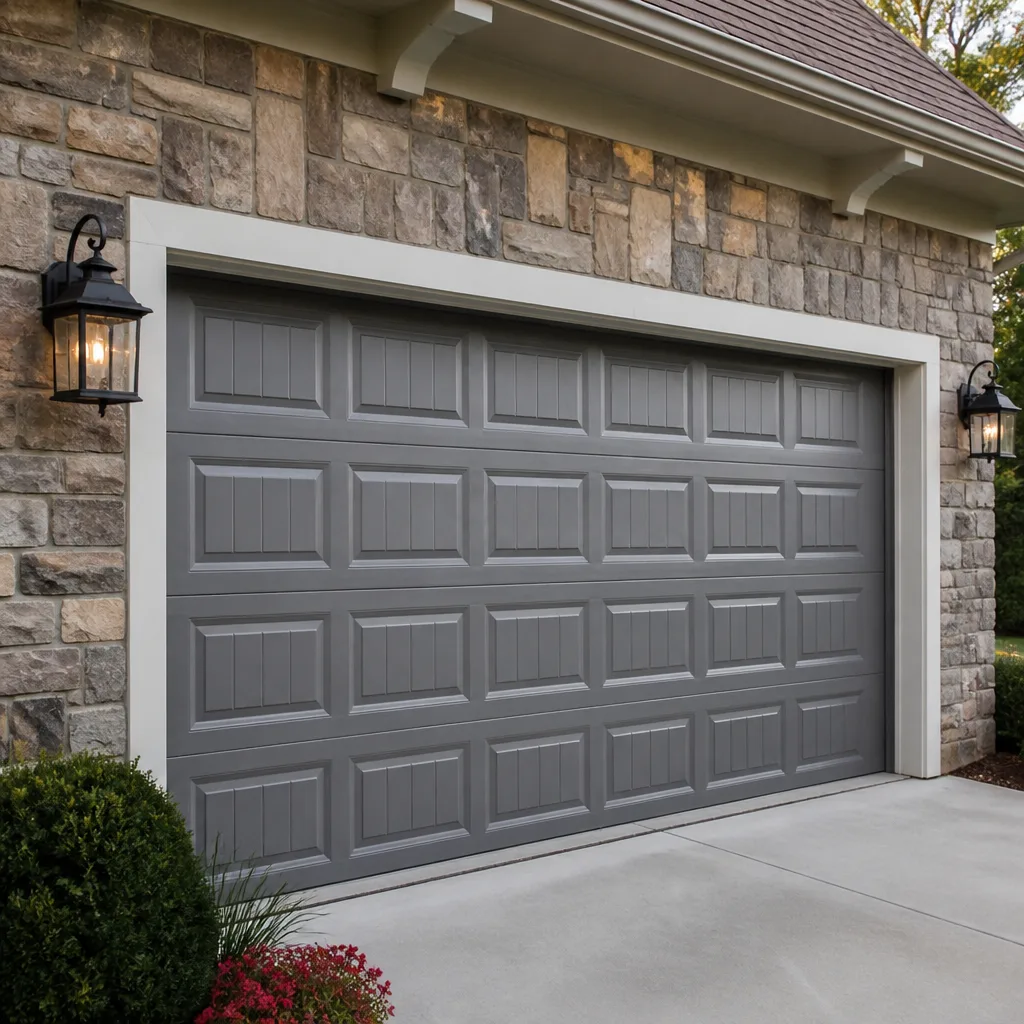 Raised-panel steel
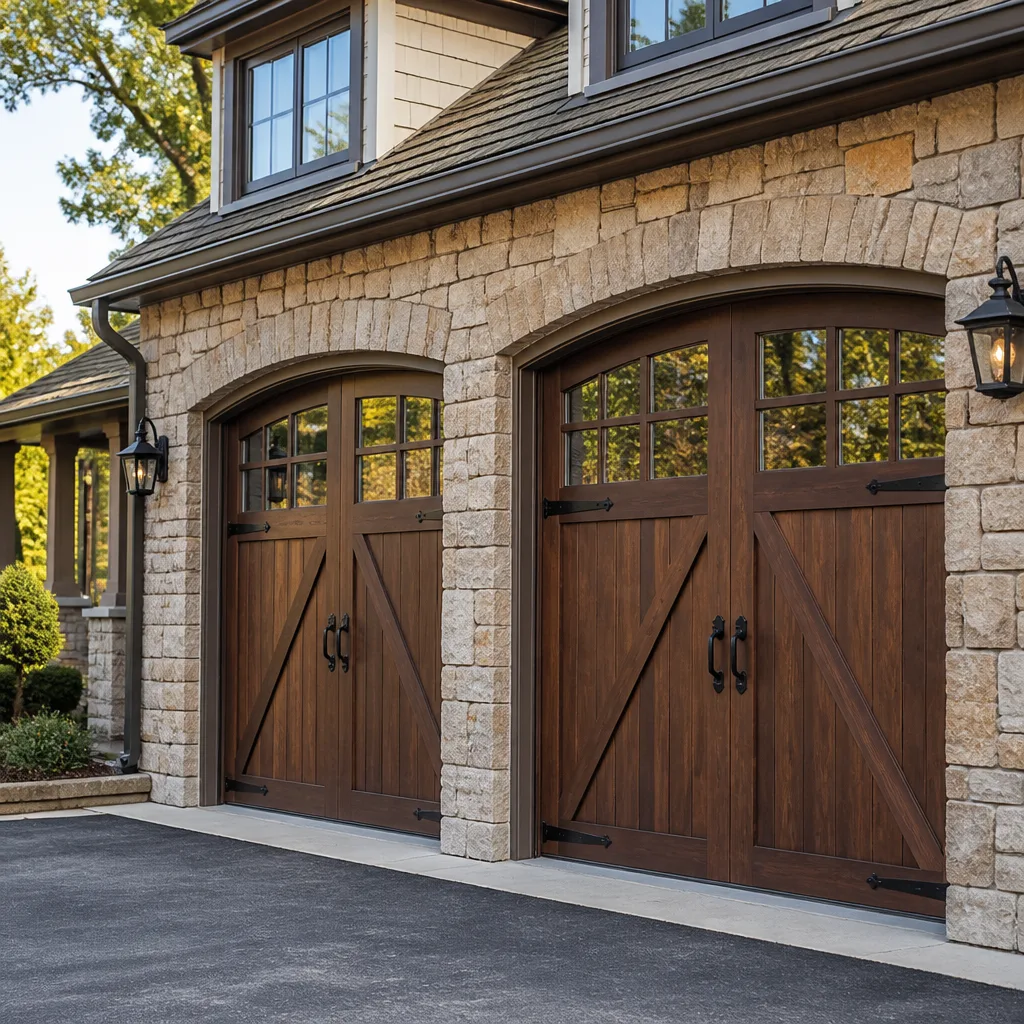 Carriage house
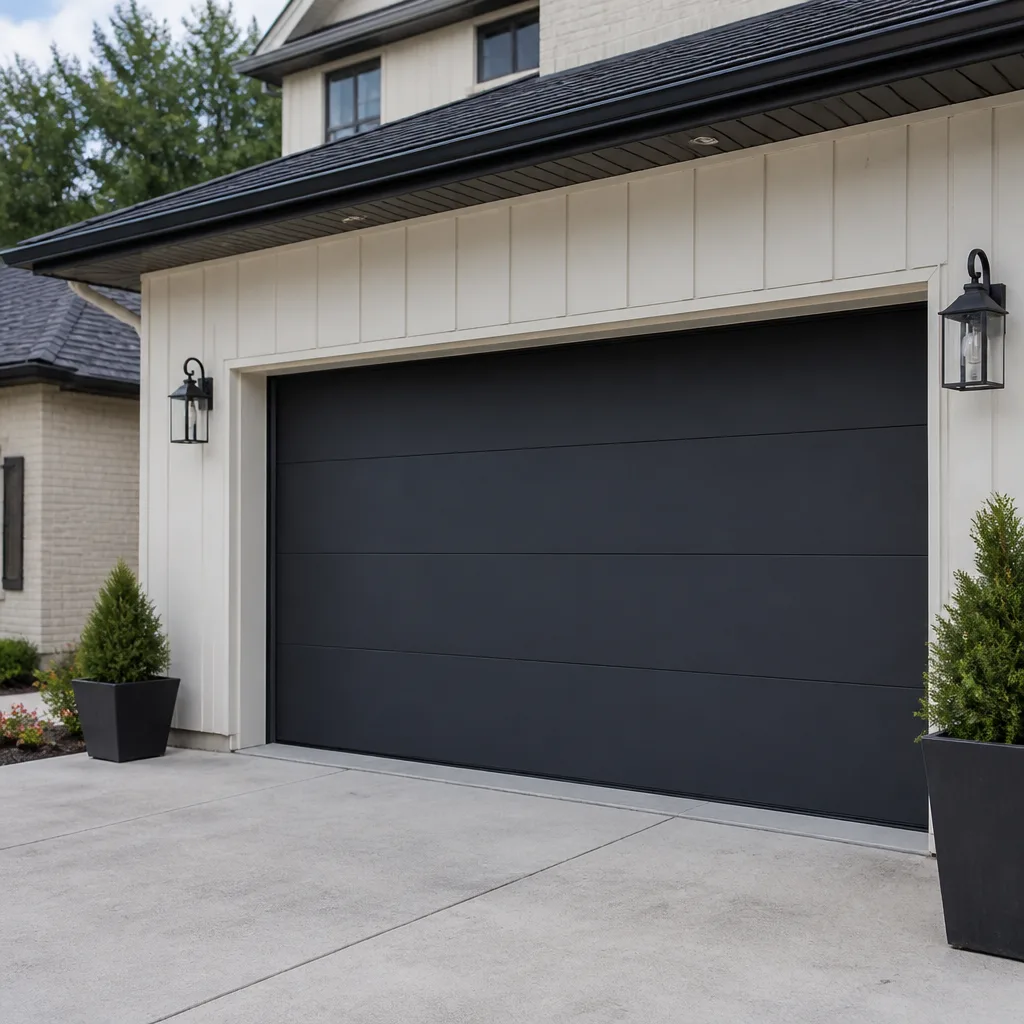 Modern flush
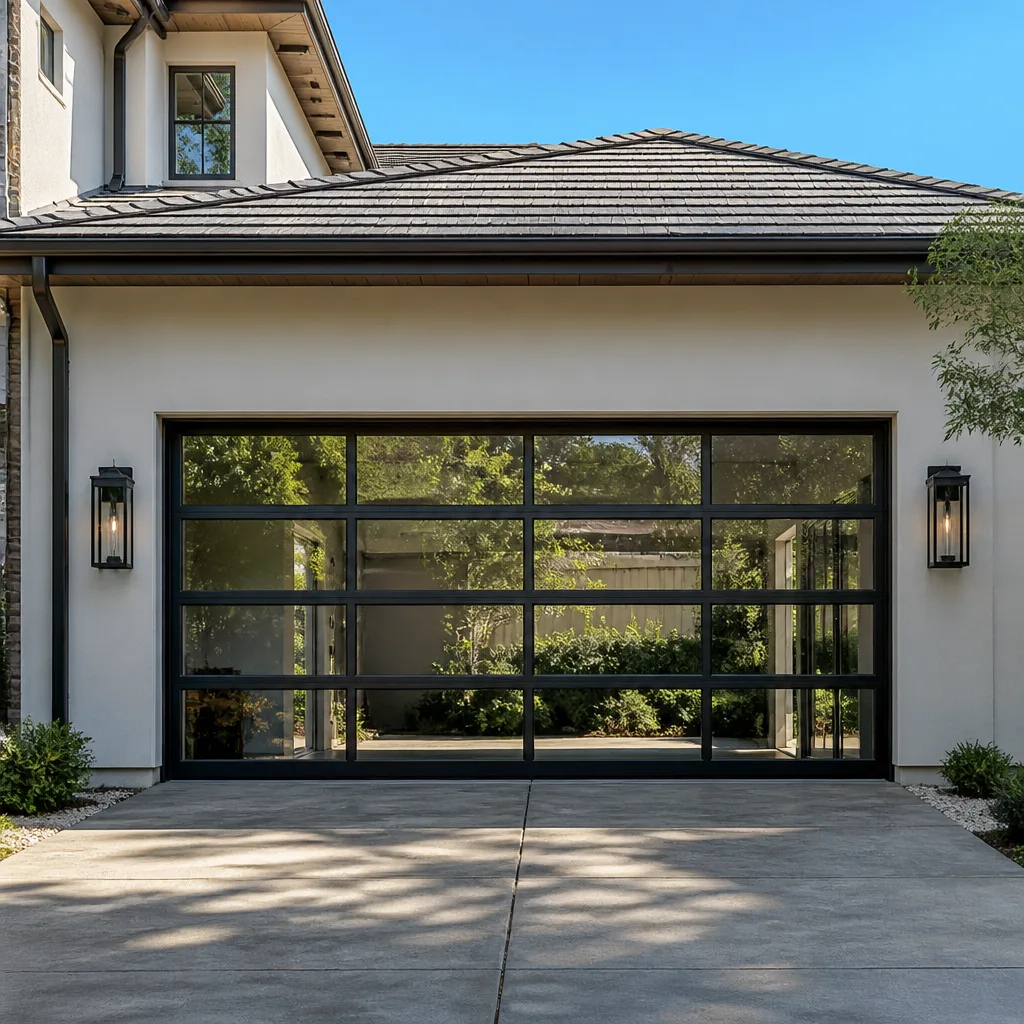 Full-view glass
 LiftMaster openers
 Chamberlain openers
Full 25-point door and opener safety check with every visit - springs, cables, rollers, tracks, and your LiftMaster or Chamberlain opener included
You get a price before we start. It does not change when the pro arrives.
Get your free estimateDIY vs Professional Garage Door: The Bradenton Homeowner’s Decision Guide
A torsion spring on a standard residential door holds roughly 100 foot-pounds of torque, and it stays under load every hour the door is down. That changes the math on DIY in a way most garage door advice ignores. The question isn’t whether you’re handy enough. It’s whether a mistake on this particular task is a do-over or a trip to the emergency room. This guide breaks down the job task by task: what you can safely handle in a Bradenton garage, what we’d never recommend a homeowner touch regardless of skill, and what the real cost comparison looks like once you count permits, warranties and risk.
Quick Answer
Adjusting safety sensors, lubricating moving parts, replacing weather seals and tightening hinges are safe DIY tasks for many Bradenton homeowners. Anything involving torsion springs, cables, drums or the track system should go to a trained technician because those components store dangerous energy and a slip can cause serious injury. And any installation or replacement door that requires a permit and wind certification should be documented properly, which usually means a licensed professional.
Styles & brands we work with
- Raised-panel steel
- Carriage house
- Modern flush
- Full-view glass
- LiftMaster openers
- Chamberlain openers
Table of Contents
- Task-by-Task: What You Can Do vs. What You Shouldn’t Touch
- Why Springs and Cables Aren’t a Skill Question
- Florida Permits and Wind Certification: What Self-Installation Really Requires
- The Honest Cost Comparison for Bradenton Labor
- How DIY Installation Can Void a Door or Opener Warranty
- Where DIY Actually Makes Sense
- Openers and Smart Systems: A Middle Ground
- Bradenton’s Heat, Humidity and Salt-Free Inland Air
Task-by-Task: What You Can Do vs. What You Shouldn’t Touch
Most garage door DIY questions come from capable homeowners who already change their own oil and hang drywall. The right answer for them isn’t “always call a pro” – that’s sales talk, not advice. It’s a line drawn by physics, not by confidence.
Here’s how the common jobs sort out for a typical Bradenton house:
Safe for a careful homeowner
- Safety sensor alignment. If the door reverses for no reason, the eyes are probably out of line or blocked. Adjusting them is a screwdriver job.
- Lubrication. A few drops on the hinges, rollers, and spring coil (never on the track itself) quiets a door and slows wear.
- Weather seal replacement. The rubber flap along the bottom takes minutes to swap and costs little.
- Tightening loose hinges and brackets. With the door fully closed and the opener disengaged, snugging hardware is fine.
- Battery replacement in remotes and wall keypads. Self-explanatory.
- Clearing debris from tracks. A rag and a dry brush, no tools needed.
Requires a trained technician
- Torsion or extension spring replacement. These hold the entire weight of the door under tension.
- Cable replacement. A snapped cable can whip with enough force to cut.
- Track realignment after a door comes off. Bending a track back by hand usually creates a worse problem.
- Panel replacement on a damaged door. A panel swap without proper balance adjustment strains the system.
- Opener replacement. Safe for some, but if it involves rewiring a circuit or swapping a lift-assist system, error is common.
- Any new door installation. This is a permit and certification matter in Florida, covered below.
The dividing line isn’t skill. It’s stored energy and building code. If a task involves something held under tension, or something a permit inspector needs to sign off on, the DIY tradeoff is bad even for someone fully capable. That’s the short version of the whole debate, and it’s what Bradenton Garage Door Repair Pros sees play out in repair calls that started as weekend projects.
Why Springs and Cables Aren’t a Skill Question
A torsion spring doesn’t weigh much, but it stores a force roughly equal to lifting a door that weighs many times more. When a spring releases unexpectedly, the force goes where you point it, not where you intended. We’ve seen what happens when a homeowner clamps a spring in a vice grip and it slips – it isn’t a small accident. That’s the honest reason garage door spring repair is a job for technicians trained specifically on high-tension hardware, not a general handyman and certainly not a first-time DIY attempt.
What a proper spring replacement involves
- Identify the correct wire gauge and length for the door weight. Wrong size means it fails early or overloads the opener.
- Wind the spring with the correct number of turns, using winding bars rated for the tension.
- Balance the door and test the opener’s travel and force limits.
- Cycle the door multiple times and recheck for vibration, misalignment or cable slack.
Steps two and three are where the risk concentrates. A partially wound spring can slip from a winding bar in a split second. That’s not a scenario you recover from with a trip to the hardware store.
The cable system is equally unforgiving. Cables run under tension alongside the springs, and a snapped one can whip at head height with enough force to seriously injure a person standing in the doorway. If a cable looks frayed or you see broken strands, stop using the door and call a technician.
There’s also a safety angle beyond the injury risk. A door with a broken spring or slipping cable can come down uncontrolled, and if that happens while a child or pet is in the path, the situation turns into a real emergency. That’s why emergency garage door service exists as a separate category – the urgency isn’t about the inconvenience, it’s about the property and access risk until the door is stable.
Florida Permits and Wind Certification: What Self-Installation Really Requires
Replacing an entire garage door in Florida isn’t just a construction project – it’s a permitting process tied to wind-load requirements. Every county has specific documentation requirements, and here in Manatee County, homeowners who install a door themselves often discover the paperwork side after the fact. Since we’re not code officials, we won’t tell you the exact section numbers, but the general shape of the process matters:
What a replacement usually requires
- A building permit filed with the local authority before installation begins.
- Product approval documentation showing the door’s wind-load rating for the specific opening.
- Proof of proper anchorage and impact rating if the opening is in a location that calls for it.
- Inspection and sign-off after installation before the project is considered complete.
Here’s the part most homeowners don’t anticipate: skipping the permit can create a problem at resale, when the home is appraised, or when an insurance claim touches the door opening. An unpermitted door is a question mark in a file, and questions get expensive. Insurance companies take an interest in wind-rated openings in Florida because they think about storm exposure, and a door that can’t be documented as compliant may be treated differently than one that can.
Bradenton’s building department can tell you exactly what your property requires – call them before you buy a door. This is also why “installing it myself to save money” rarely pencils out when the door is a replacement rather than a repair. The permit, inspection and documentation are part of the job, and they exist for a reason. In our experience working Bradenton homes, the ones that end up with a smooth close at resale are the ones where installation documentation is clean. Our team handles this as part of full installation work; the local pro is licensed and insured as their state requires, and the paperwork trail reflects that.
The Honest Cost Comparison for Bradenton Labor
Real cost comparisons for garage door work in Bradenton need to include more than the price of parts. Here’s the line-by-line picture for common tasks, using typical Bradenton-area pricing. These are estimates – the written quote you get is the final price, and it’s agreed before any work starts.
| Task | Typical professional cost (Bradenton) | DIY parts cost | Risk you take on |
|---|---|---|---|
| Safety sensor adjustment | $80 – $150 | $0 (no parts) | Minimal – DIY fine |
| Weather seal replacement | $100 – $180 | $15 – $45 | None – DIY fine |
| Lubrication and tune-up | $75 – $150 | $10 – $20 for lubricant | None – DIY fine |
| Single torsion spring replacement | $180 – $340 one spring | $40 – $90 one spring | Serious injury risk |
| Matched spring pair replacement | About twice the single-spring rate | About twice the single-spring parts cost | Serious injury risk |
| Cable replacement | $150 – $300 | $25 – $60 | Serious injury risk |
| Opener replacement (belt drive) | $300 – $550 plus opener | $200 – $400 opener only | Moderate to high depending on existing wiring |
| New door installation (single-car, standard) | $1,000 – $2,200 | $700 – $1,500 door only, no permit | Permit, certification, warranty |
Read the table honestly. The DIY parts cost for a spring is maybe a fifth to a sixth of the professional price, which looks like a big savings on paper. But a single trip to urgent care – even with insurance – quickly absorbs that margin, before you count the lost weekend, the risk of a second spring failing two weeks later because you replaced one of a matched pair, or the door sitting crooked because the spring wasn’t wound correctly.
The cost comparison looks even worse when the task is a whole door. The $300 – $700 you save by installing a $1,500 door yourself disappears the moment you add the permit fee, the inspection, the missing product-approval documentation, and possible remediation costs at resale. For repair work specifically, garage door repair done by a professional carries a labor warranty the parts alone don’t. If the repair fails, someone else fixes it.
Where the calculator actually favors DIY
The seal, sensor and tune-up work – budget five minutes and a few dollars in parts. The savings are small in absolute terms but the work is genuinely safe and you don’t need a technician in your driveway for a weather strip. This is the category where self-service makes complete sense.
How DIY Installation Can Void a Door or Opener Warranty
Garage door and opener manufacturers write their warranties assuming a licensed installer did the work. That’s not a marketing gimmick – it’s how they limit exposure, because a spring installed with the wrong number of turns or a door anchored to a wall that isn’t properly reinforced will fail in predictable ways. If a warranty claim comes back with a self-installed door, the manufacturer usually has the right to decline coverage on the parts.
That matters more than most homeowners expect. If you buy a $1,500 door and it fails due to a manufacturing defect at month 18, the warranty is exactly the reason you bought that door over a cheaper one. It’s the same for an opener. LiftMaster and Chamberlain both require professional installation for their warranty coverage to remain valid, and Craftsman units carry similar terms. Self-installing to save $400 in labor can put the full purchase price at risk.
What voiding coverage means in practice
- The manufacturer may refuse to replace failed parts, even if the part was defective from the factory.
- The installer isn’t on the hook, since you were the installer.
- A door that fails early due to installation error can’t be repaired under warranty – it just has to be fixed.
- An insurance company may question coverage on a claim touching the door if no professional installation record exists.
None of this is about discouraging you from saving money. It’s about knowing which money you’re saving and which money you’re risking. For a $1,500 door with a 10-year warranty, the DIY savings are small in comparison to the dollar value of that warranty. That math rarely works in the homeowner’s favor.
Where DIY Actually Makes Sense
Fairness matters here. A guide that tells you to call a professional for everything isn’t advice, it’s a sales pitch. There are real garage door tasks most homeowners handle better than a technician appointment, and we recommend them.
Tasks we encourage
- Weather seal replacement. If you can see daylight under the door, the bottom seal is worn. Pop the old one out, slide the new one in, cut to length. Fifteen minutes.
- Safety sensor alignment and cleaning. A door that refuses to close, or reverses midway, is often just a sensor bumped out of line. Straighten both eyes so their lights face each other and steady on. Wipe the lenses.
- Lubrication. Use a garage-door-rated lubricant on hinges and rollers, not WD-40 (which strips grease rather than adding it). Twice a year is plenty.
- Remote and keypad battery replacement. A dead remote reads as a dead opener more than half the time. Try the battery first.
- Tightening hinge bolts. With the door fully closed and opener disconnected, snug any loose hinge screws.
- Cleaning the tracks. A dry rag and a brush. Never use grease on the track itself – it attracts grit.
If you’re comfortable on a stepladder and you have a screwdriver, all of the above saves real money and improves the door’s life. When these jobs go wrong, the worst case is an annoying service call, not a hospital visit.
Openers and Smart Systems: A Middle Ground
Openers live between the safe DIY and professional-only categories, and the specific unit matters. A direct-drive garage door opener repair on a legacy Craftsman unit might just be a new drive gear or a capacitor swap – work a confident homeowner can research and do. But once the job involves replacing the whole motor on a LiftMaster or Chamberlain unit wired into a smart system with battery backup, WiFi module, and safety sensors cross-linked with the rest of the house, the failure modes pile up quickly.
Common scenarios that catch DIY installs:
- New opener paired to existing safety sensors with the wrong beam technology – door reverses inexplicably.
- Force-sensitivity set too high, so the door doesn’t reverse on obstacle contact.
- WiFi module not provisioned correctly, so the app can’t reach the opener even though it works locally.
- Lift-assist or jackshaft configurations installed with the wrong coupling to the torsion bar.
Signs it’s time to hand off
If the opener won’t pair, the door won’t reverse on the box test, or you’re swapping a legacy unit for a new smart-drive model, hand it off. A technician who works with LiftMaster and Chamberlain daily can usually diagnose these in a single visit, and they’ll adjust force and travel correctly on the way out. That adjustment step alone is why we recommend a professional for any opener replacement, even for a homeowner who’s comfortable with wiring.
Bradenton’s Heat, Humidity and Salt-Free Inland Air
Garage doors in Bradenton face a specific set of environmental conditions that change how DIY vs. professional plays out over time. The inland climate here brings long, hot summers and high humidity without salt air blowing in from a coast – which is good for metal. But heat and humidity still do real work on a garage door over the course of years.
What that means in practice
- Wood doors warp in the humid season. A warped bottom panel throws off the balance and adds strain to springs and the opener. Once a wood door has gone out of square, panel and hardware work becomes a professional job.
- Steel doors collect condensation in the summer. That shows up first at the hinges and the bottom rail. Rust inhibitors and annual lubrication save the panel.
- Rubber seals harden faster in heat. The bottom weather strip in a Bradenton garage often needs replacement every few years just from temperature cycling, not wear. This stays a DIY job.
- Opener motors run hotter. A belt-drive or direct-drive unit works harder here in summer; if you hear the opener straining or stalling mid-cycle, get it checked before the motor burns out.
- Springs cycle more, break sooner. No door is immune, but in a climate where doors get used daily year-round, spring failure arrives earlier than many homeowners anticipate. That’s a professional job.
Bradenton garages may also host additional heat sources – water heaters, laundry, storage – that drive humidity up further. None of that changes the DIY vs. professional math for springs and installation. It does change the maintenance schedule: an annual tune-up and lubrication goes further here than in a cooler climate, and it’s the cheapest insurance against small issues becoming spring replacements or opener failures.
See the difference
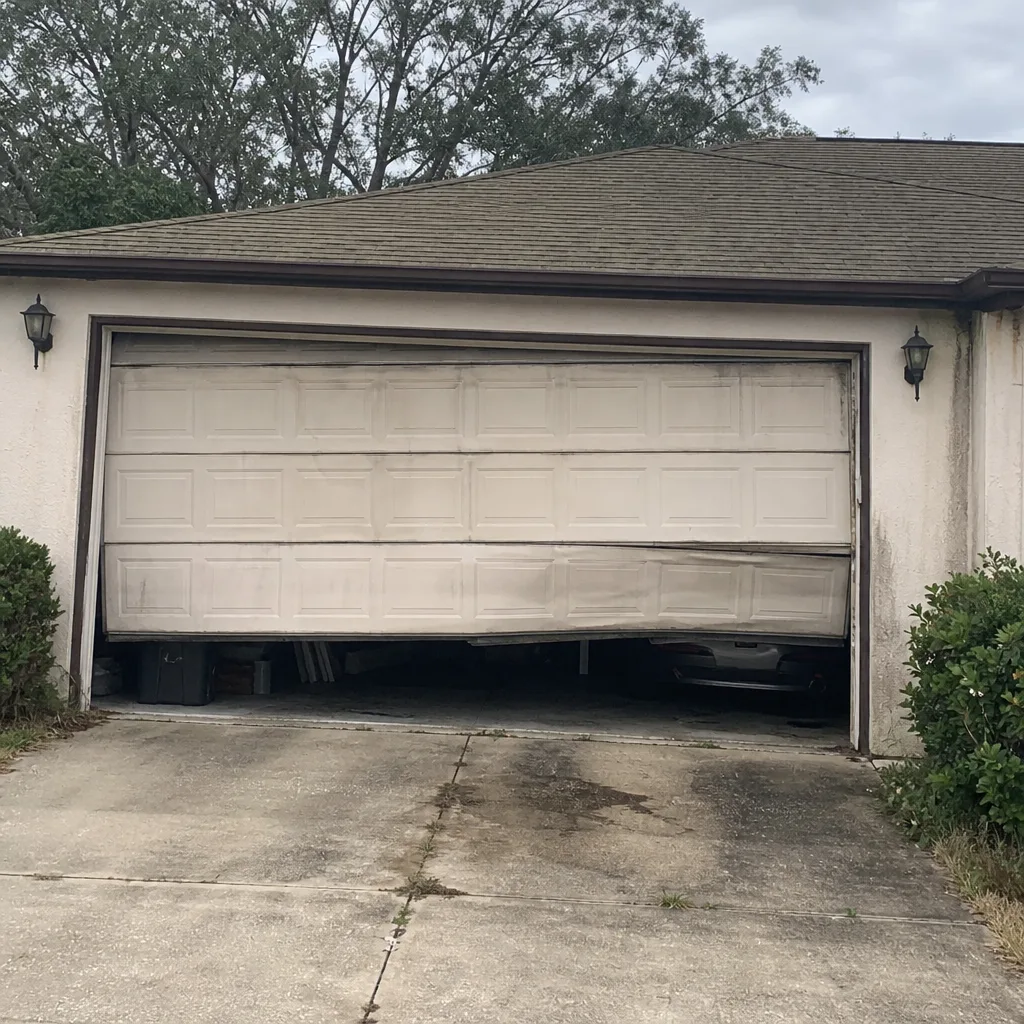 Before
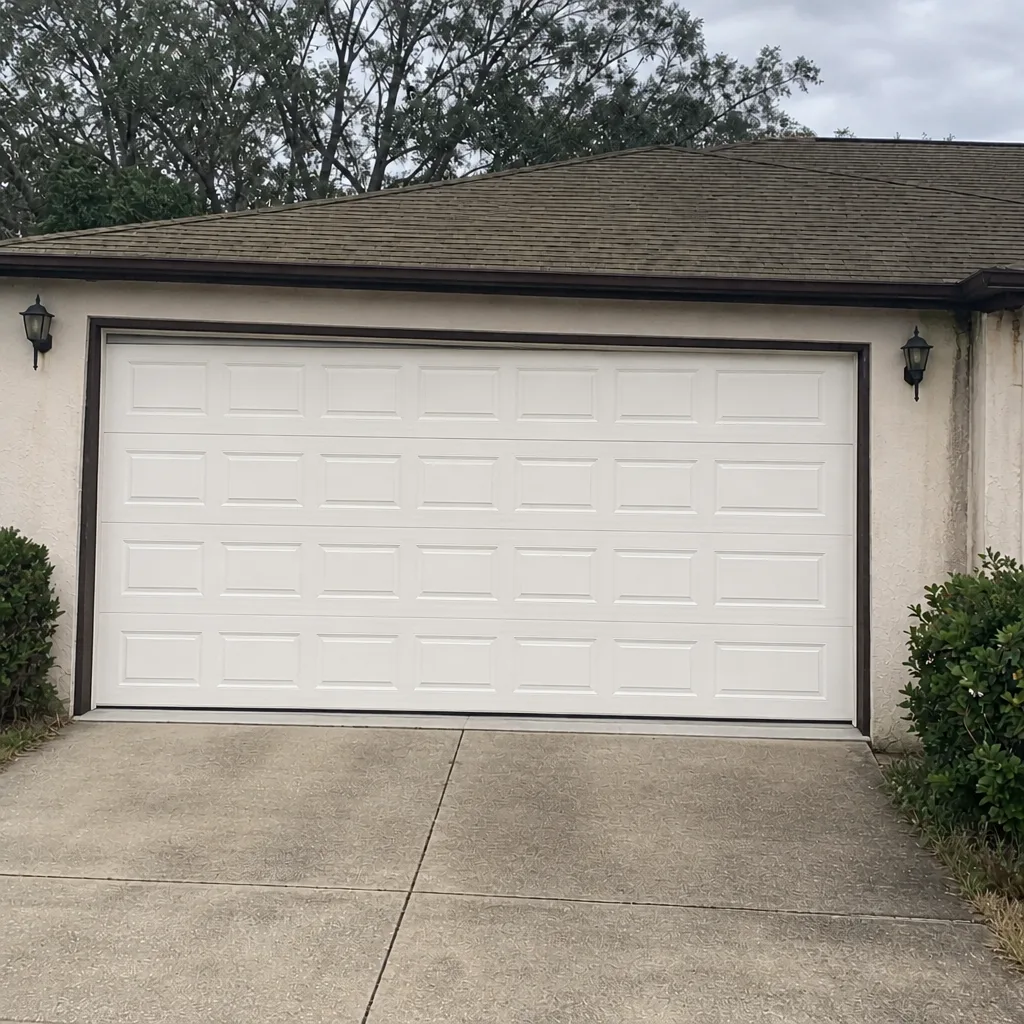 After
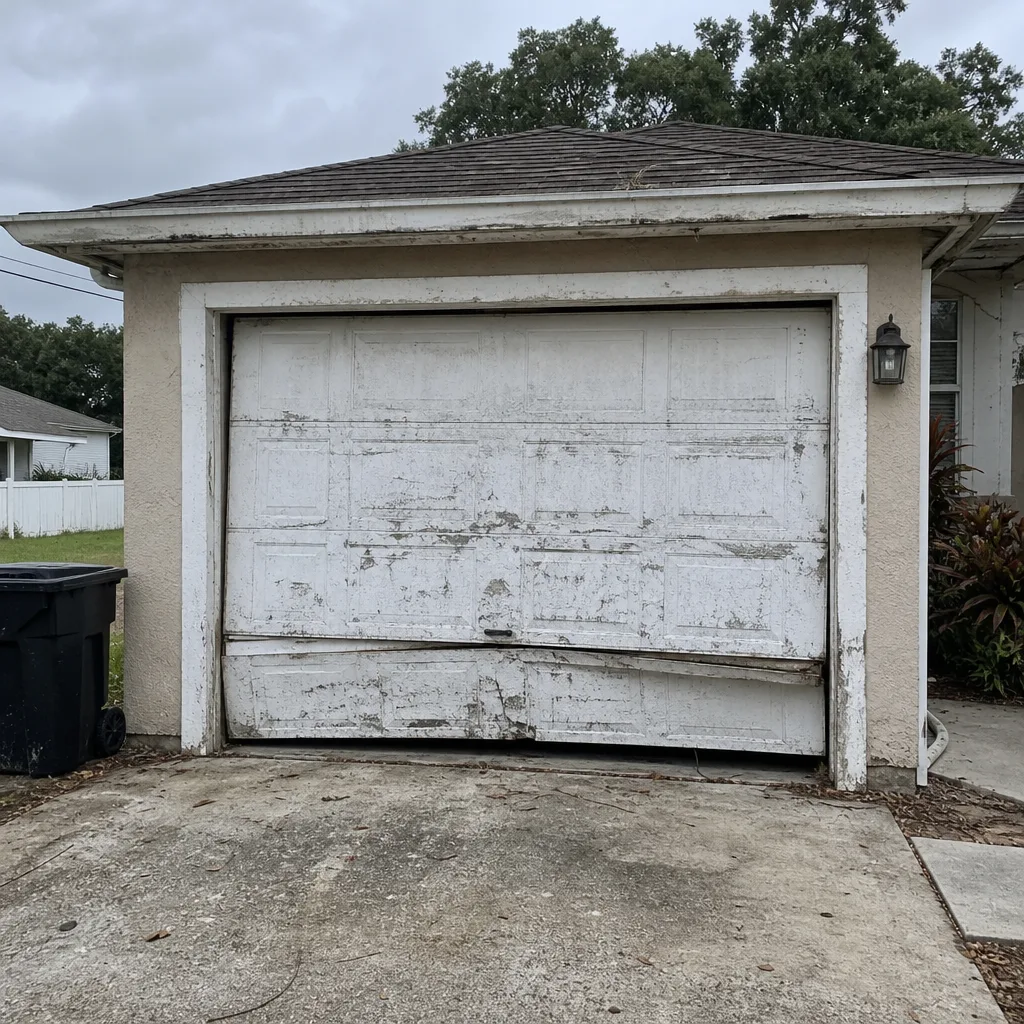 Before
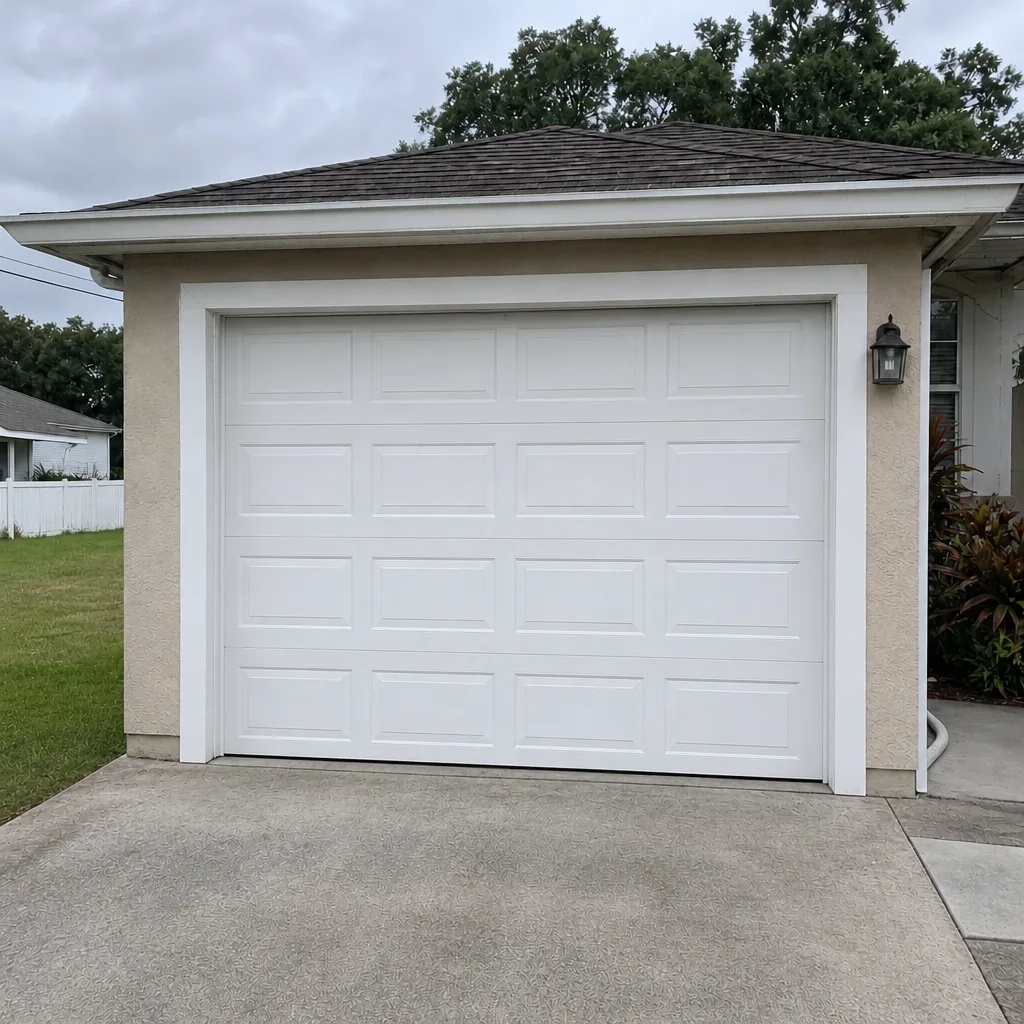 After
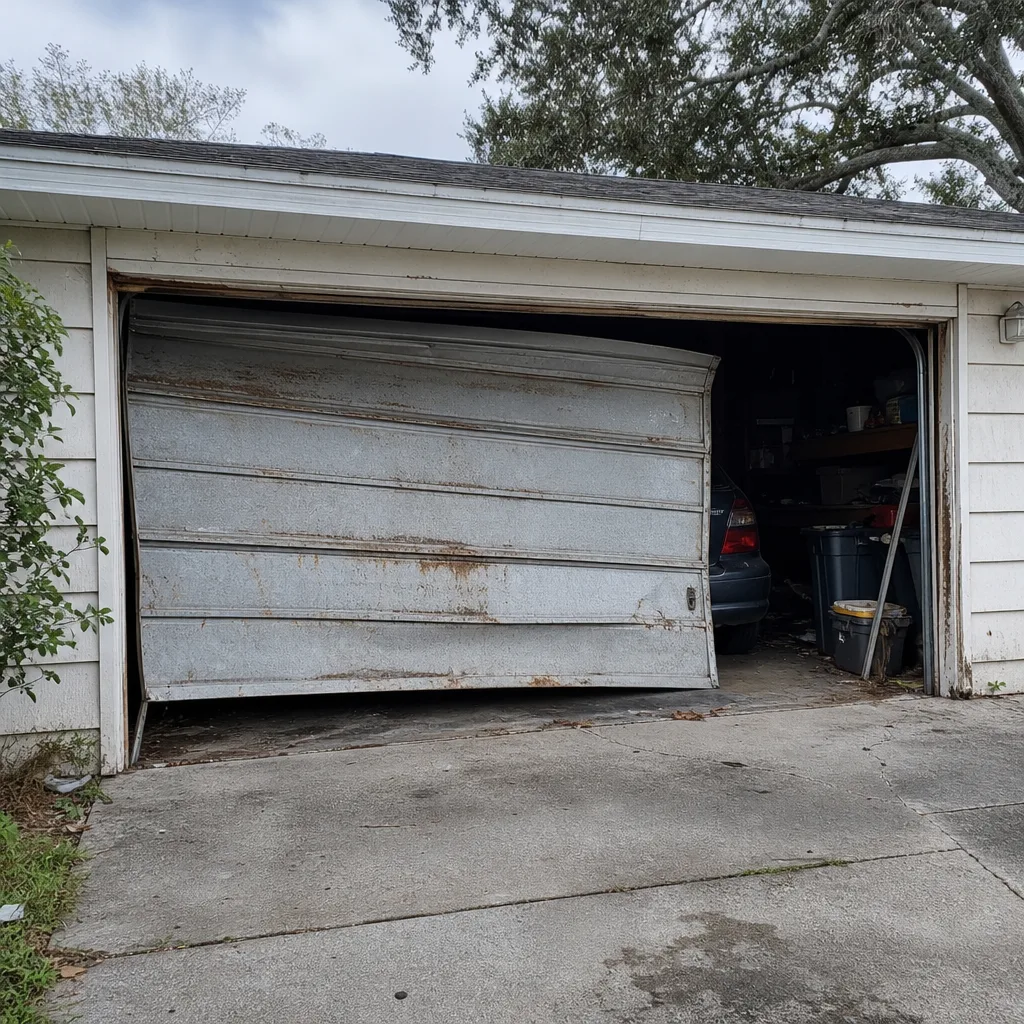 Before
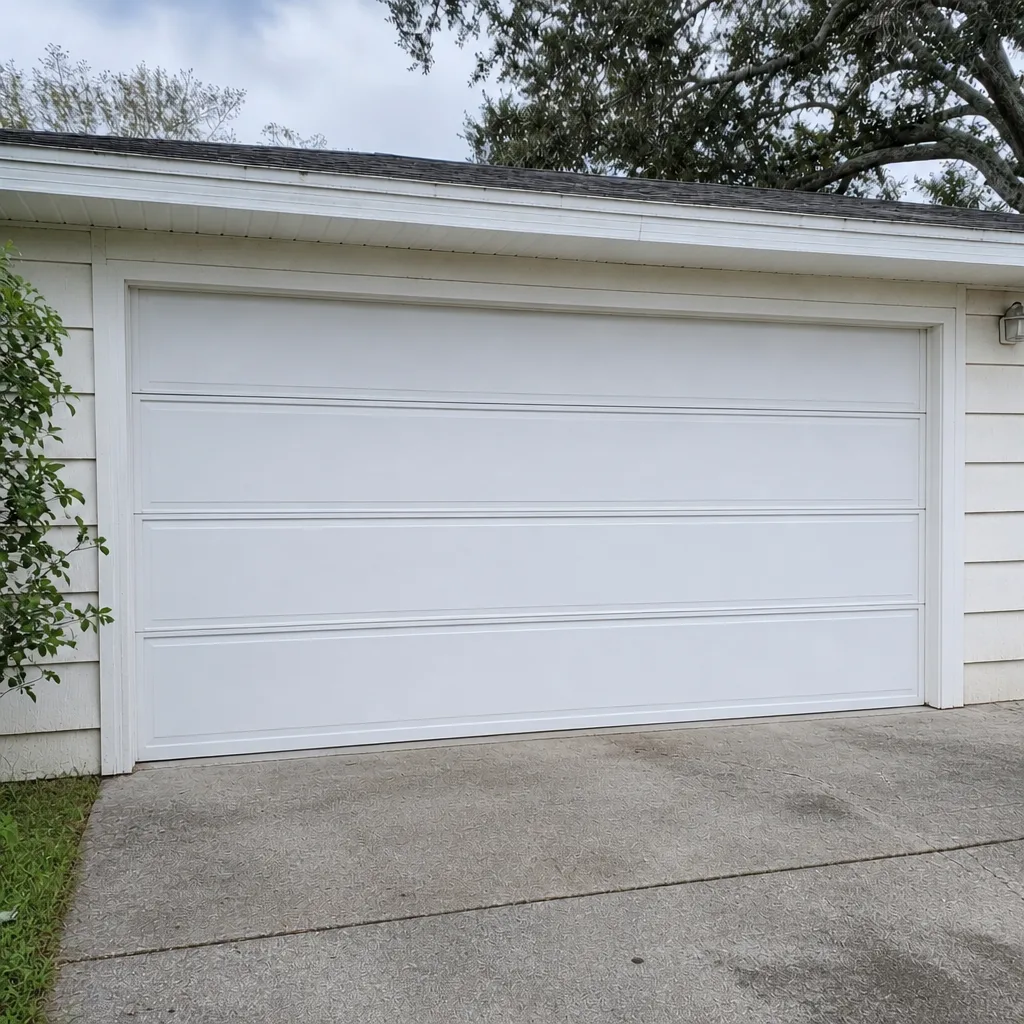 After
Common Mistakes to Avoid
- Trying to “help” a spring along with a screwdriver. Prying on a torsion spring to get it to wind is the single most common path to an injury. Springs are wound with proper winding bars or not at all.
- Replacing one spring of a matched pair. When a torsion set fails, both springs are cycled equally. Replacing only one puts fresh tension against a tired partner, and the second goes within weeks. The pair is replaced together, priced at roughly twice the single-spring rate.
- Skipping the permit on a door replacement in Manatee County. It seems like a paperwork shortcut until the appraiser or insurer asks for documentation. Ask the building department before you buy the door.
- Greasing the tracks to quiet a noisy door. Grease attracts grit, and grit wears rollers faster. Lubricant goes on hinges and rollers, never the track surface.
- Adjusting the opener’s force limit upward to stop reversing. If the door reverses on contact, the force setting is doing its job. Turning it up masks the symptom and disables a safety system.
- Buying a new opener without checking the door’s balance. A door with a failing spring puts the new opener motor under continuous load, which is a fast route to a second repair.
- Self-installing a door to save the labor without reading the warranty terms. LiftMaster, Chamberlain and Craftsman all have installation requirements tied to warranty coverage. Read before you buy.
When to Call a Professional
Call a professional when the task touches a torsion spring, a cable, a track out of alignment, an opener replacement, or a door replacement that needs a permit and wind documentation. Call immediately if the door has come off its tracks, a spring has visibly snapped, a cable is frayed, or the opener stalls during travel – a door left in that state can fall or become a security problem overnight. Emergency garage door service exists for exactly these situations.
For the safe category – sensor alignment, lubrication, weather seals – we’d rather you handle it than wait for a service call. The middle ground (opener replacement, panel work, smart system integration) is worth a phone call to talk through before you decide.
Bradenton Garage Door Repair Pros offers free estimates in Bradenton – call (844) 941-2329. Our technicians have up to 12 years of experience across the brands most commonly installed in this area, including LiftMaster, Chamberlain, Craftsman and Raynor. Whether you own a legacy Craftsman opener or a newer LiftMaster smart-drive unit, we work on the brand already in your garage. The local pro is licensed and insured as their state requires, and the price is quoted and agreed before any work starts so there are no surprises on the invoice.
Frequently Asked Questions
It’s possible but not recommended. Springs store concentrated energy that can cause serious injury in a split second, and the winding process requires specific tools and training. A torsion spring repair in Bradenton typically costs $180 – $340 for a single spring, which is a fair price against the injury and hospital-visit risk. Call (844) 941-2329 for a free estimate.
Yes, in most cases. Manatee County requires a permit for garage door replacement along with product-approval documentation showing the door’s wind-load rating. It’s worth calling the Bradenton building department directly for your specific property before purchasing a door. A professional installer handles this on the front end and provides the documentation you’ll want if you ever sell the home.
Frequently, yes. LiftMaster, Chamberlain and other major manufacturers require professional installation for their warranty terms to remain in effect. A $1,500 door losing warranty coverage over a DIY labor saving of a few hundred dollars is a bad trade. If warranty matters to you, have it installed professionally.
Sometimes. Remote battery replacement, sensor alignment, and force-limit resets are safe for most homeowners. Anything that involves opening the motor housing, swapping a logic board, or replacing an entire opener should go to a technician. If it’s a LiftMaster or Chamberlain smart system, the pairing and force calibration steps are a common source of DIY headaches.
Typical Bradenton-area pricing for repair work starts around $100 – $180 for minor issues like sensor alignment or lubrication and runs $180 – $340 for a single torsion spring replacement. A matched pair replacement is roughly twice the single-spring rate. These are estimates – the written quote is what you pay, and it’s agreed before work starts. Call (844) 941-2329 for an exact quote; estimates are free.
Often, yes. Emergency garage door service is available for situations where a stuck door creates a security or access problem, and same-day scheduling is usually possible. Call (844) 941-2329 as soon as you notice the problem so we can get a technician out and stabilize the door.
Yes. On a matched pair, both springs have cycled the same number of times, so when one breaks the other is close behind. Replacing both at once costs about twice the single-spring rate and prevents a second breakdown weeks later.
Lubricate hinges and rollers twice a year, keep tracks clean and dry, test the safety sensors monthly by blocking the beam, and check the bottom weather seal for cracks. These tasks are genuinely safe and add years to the door’s life without needing a service call.
The Bottom Line
The DIY vs. professional decision on a garage door is a task-by-task call, not a philosophy. Sensors, weather seals, lubrication and small hardware adjustments are worth doing yourself and save real money. Springs, cables, opener replacement and full installations are worth hiring out, not because you can’t learn the steps but because the wrong outcome is severe enough – injury, permit problems, warranty loss on a $1,500 door – that the risk outweighs the labor savings. For everything in the middle, a free estimate from a garage door specialist clarifies the call quickly. Call (844) 941-2329 if you want a professional opinion before you start.
Written by the team at Bradenton Garage Door Repair Pros.