Last updated November 21, 2026
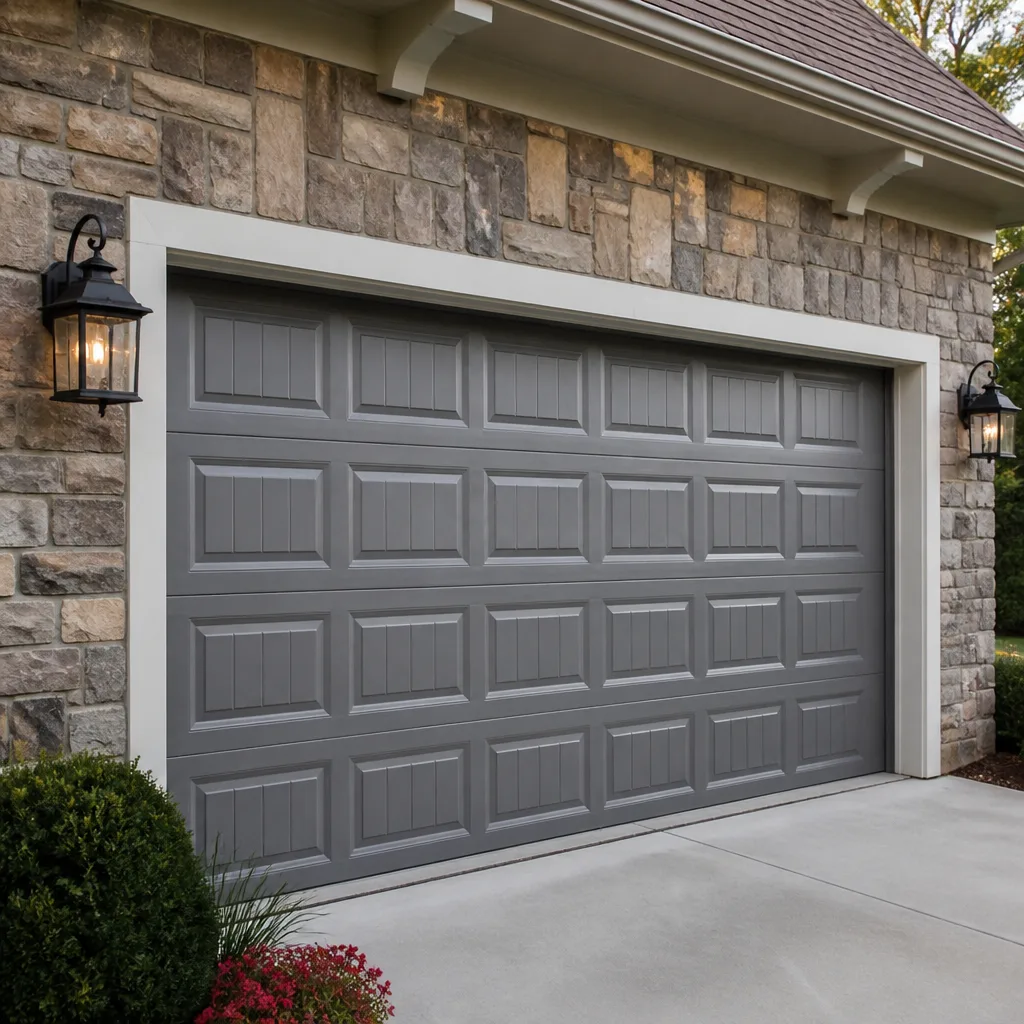 Raised-panel steel
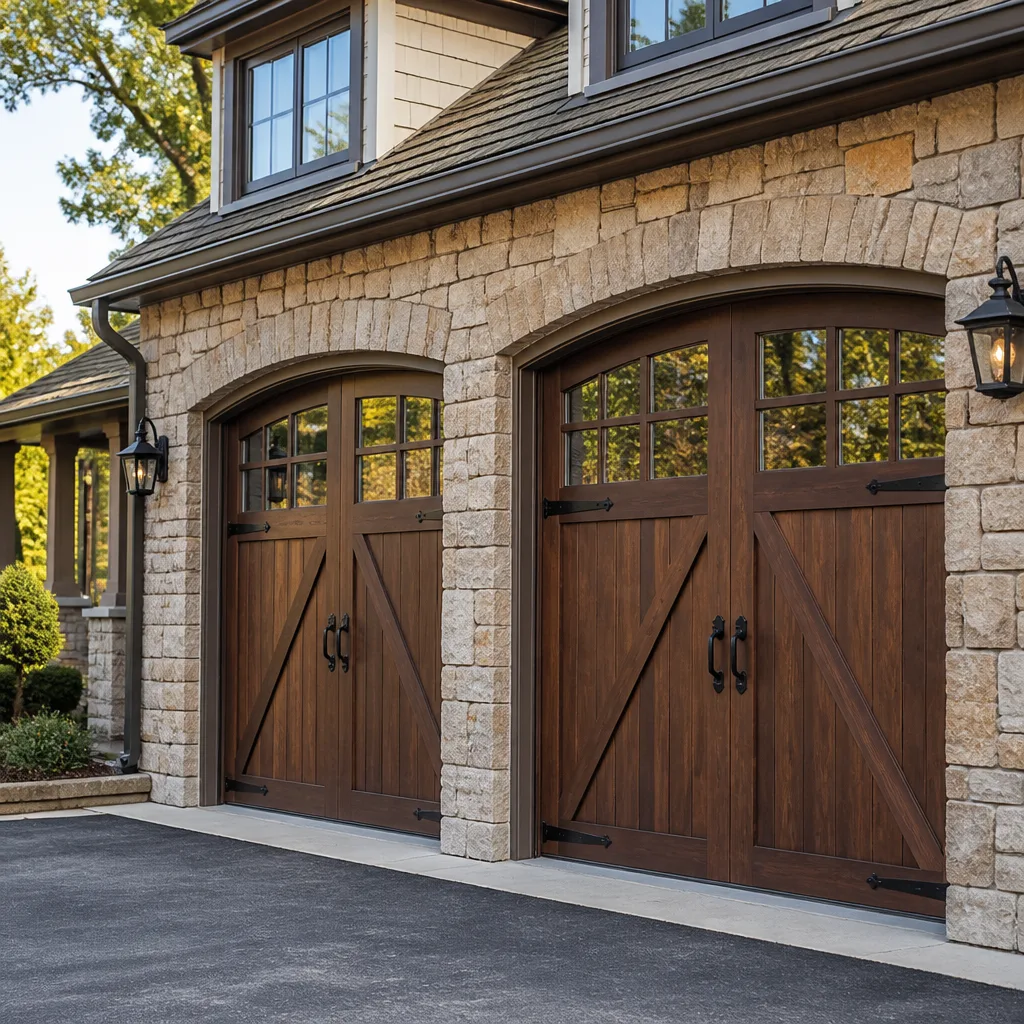 Carriage house
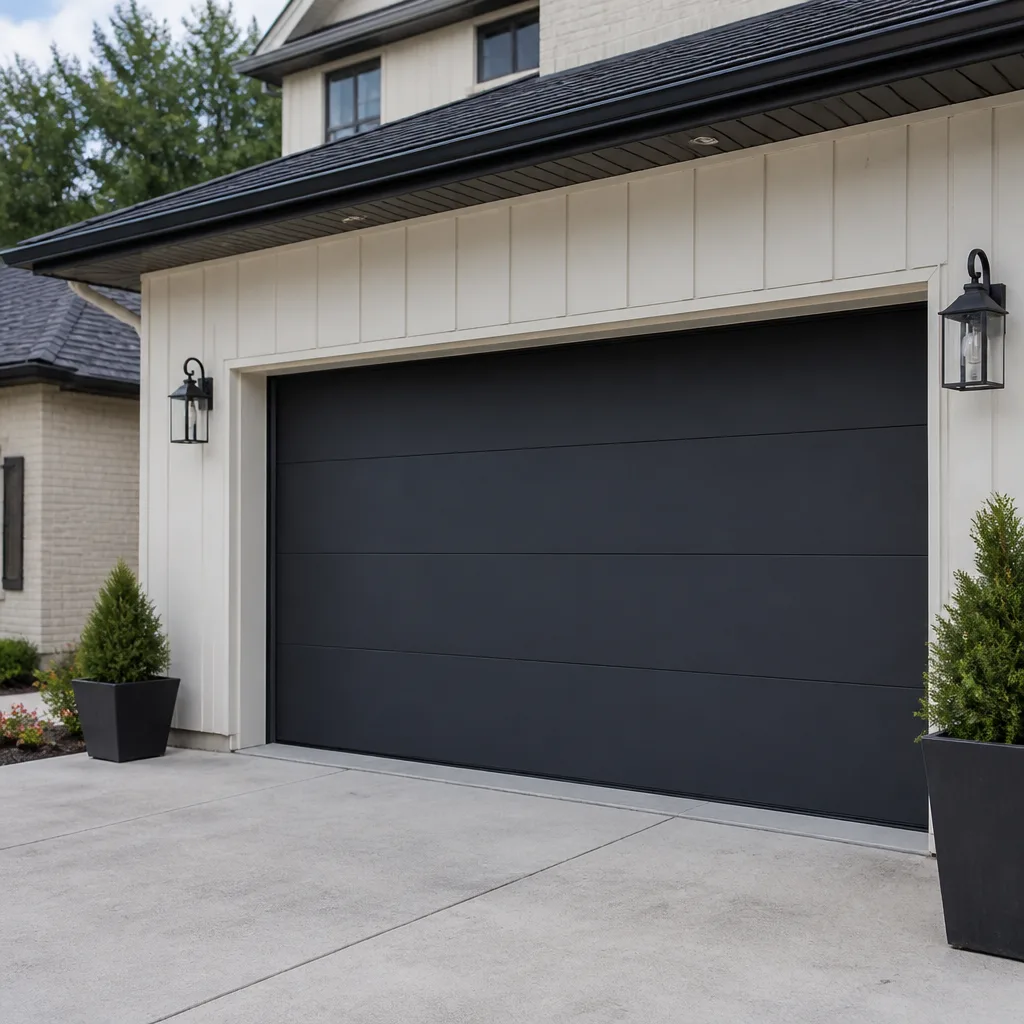 Modern flush
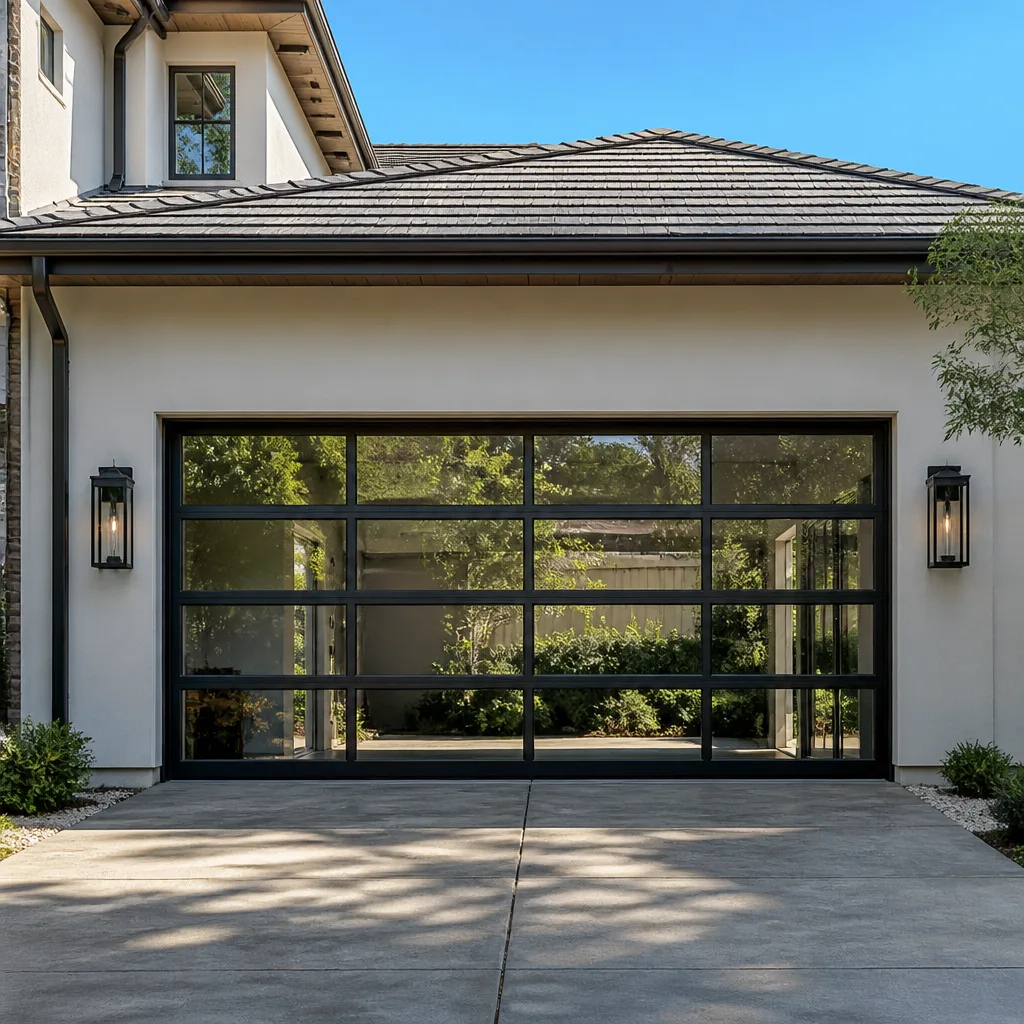 Full-view glass
 LiftMaster openers
 Chamberlain openers
Full 25-point door and opener safety check with every visit - springs, cables, rollers, tracks, and your LiftMaster or Chamberlain opener included
You get a price before we start. It does not change when the pro arrives.
Get your free estimateSeasonal Garage Door Care for Bradenton: Year-Round Homeowner’s Guide
Telling a Bradenton homeowner to “winterize” the garage door is useless advice. Our winters are mild, the door never sits under snow, and the cold-weather rituals northern guides recommend don’t match what actually wears a door out here. What does match is a two-season calendar most homeowners have never thought about: a May prep push before hurricane season opens, and the humid summer stretch that quietly ages springs, seals, and sensors. This guide lays out the Florida maintenance rhythm for your garage door, month by month, so you know what to check, what to document, and what to leave to a trained technician in Bradenton.
Quick Answer
Garage door care in Bradenton follows two real seasons, not four: a pre-hurricane prep window in May and early June, and a high-humidity summer that speeds up spring fatigue, corrosion, and seal wear from June through November. The calm dry stretch from December through March is your best window to handle proactive repairs, spring replacements, and opener service before the next storm season arrives.
Styles & brands we work with
- Raised-panel steel
- Carriage house
- Modern flush
- Full-view glass
- LiftMaster openers
- Chamberlain openers
Table of Contents
- Why Bradenton Needs Its Own Garage Door Calendar
- The May Pre-Hurricane Checklist: What to Inspect, Tighten, and Document
- What to Do With Your Garage Door Right Before a Hurricane Threatens
- Post-Storm Inspection: Finding Hidden Damage Before It Fails
- The Dry-Season Window: December Through March
- Pollen Season and Your Photo-Eye Sensors and Weather Seals
- How Summer Humidity Affects Springs, Tracks, and Hardware
- Opener Care Through the Florida Year
Why Bradenton Needs Its Own Garage Door Calendar
Garage door maintenance advice written for colder climates is built around freeze and thaw. That cycle does real damage to concrete, metal, and seals up north, and it’s the reason northern guides harp on lubrication before the first freeze and salt cleanup after the last. Bradenton doesn’t run that cycle. Our problem is different: sustained heat, heavy summer humidity, and a hurricane season that puts wind-driven rain and flying debris in front of your door every year from June through November.
That shape changes what breaks and when. In our experience across Bradenton, the failures we see cluster around two periods. Right after hurricane season winds down, doors that took a beating but didn’t fail outright start showing symptoms: a track knocked slightly out of alignment, a panel that took an impact, a spring that’s been working harder than it should. Then in late summer, during the worst of the humidity, we get a steady run of spring failures and sensor faults on doors that were never checked in the spring.
Here’s the practical difference. A northern homeowner’s biggest seasonal headache is ice in the tracks and cold-stiffened grease. A Bradenton homeowner’s biggest headaches are:
- Springs that fatigue faster under constant heat and humidity cycling
- Weather seals that dry out, crack, and let rain in
- Photo-eye sensors that fog, film over with pollen, or drift out of alignment
- Tracks and hinges that corrode when moisture sits on them
- Doors that took wind or impact damage and weren’t checked afterward
None of those show up on a northern maintenance schedule. They’re the reason this guide exists, and the reason the calendar below runs from May to April instead of following the traditional four seasons. If you’d rather have a specialist walk the door with you than work through this list cold, our Bradenton Garage Door Repair Pros team handles that kind of inspection.
The May Pre-Hurricane Checklist: What to Inspect, Tighten, and Document
Hurricane season opens June 1, and the smart window to prep your garage door is the last two weeks of May or the first days of June. The goal isn’t to make the door storm-proof (nothing short of a rated storm door is) – it’s to make sure the door you have is in the best shape to hold up, isn’t going to fail on its own the moment wind pressure hits it, and that you have a record of its condition before the season starts. Here’s the walk-through we recommend.
- Look at the panels. Walk the full width of the door with it closed and look for dents, cracks, loose panel seams, or separation between sections. Any panel that’s already compromised is the first thing to give under wind pressure.
- Check the tracks for alignment. Look down each vertical track from the top. Any kink, bend, or gap between the track and the door rollers needs attention. A track that’s already out of line will bind when the door flexes.
- Tighten the hardware. Every hinge, bracket, and roller carrier has a bolt. Check them with a wrench. Loose hardware rattles and works itself looser; snugged-down hardware holds.
- Inspect the springs and cables. Look at the springs for gaps, rust streaks, or a stretched appearance, and check the cables for fraying. Do not touch, adjust, or tension anything – high-tension springs and cables can cause serious injury. Note what you see and call a specialist.
- Test the safety reverse. Put a piece of wood flat under the door’s travel path and close the door. It should reverse on contact. If it doesn’t, that’s an opener or sensor issue to sort before the season.
- Check the weather seal at the bottom and sides. Look for cracks, gaps, or a seal that’s pulling away. A seal that’s failing lets wind-driven rain in, and in Bradenton that rain gets in sideways.
- Document the condition. Date-stamped photos of the door, tracks, and springs are worth taking. If something shows up after a storm, you’ll know whether it was already there.
If this feels like a lot to check on your own, that’s fine – it’s exactly the kind of walk-through our technicians do. A pre-season check on the door, springs, and opener is far cheaper than a post-storm repair on a door that should have been caught in May. For the hardware side specifically, garage door repair before the season is the smartest appointment on the calendar.
What to Do With Your Garage Door Right Before a Hurricane Threatens
When a named storm is in the forecast, the garage door needs two things from you: it should be sealed up tight and secure, and it should not be moved by anyone who doesn’t know how to operate it safely under storm conditions. Here’s what to do, in order, as a storm approaches.
- Close and lock the door fully. A closed door resists wind far better than a partially open one. Confirm it’s seated all the way down and the lock bar or lock mechanism (if the door has one) is engaged.
- Clear the area in front of and above the door. Patio furniture, loose tools, and anything leaning against the garage wall can become a projectile. Move it inside or secure it.
- Handle the manual release cable carefully. Every door with an opener has a red manual release cord. Most homeowners have never touched it. In a storm, it’s easy to grab in a panic and pull it, which disconnects the door from the opener. That’s the right thing to do in a power outage – it lets you open the door by hand. It’s the wrong thing to do if the door is under load or if you don’t know whether the springs are sound. A disconnected door under weak springs can drop. Know where the cord is, know what it does, and don’t pull it unless the power is out and you need to get a car out.
- Don’t try to reinforce the door with boards or braces. A residential door that wasn’t engineered as a storm-rated door doesn’t benefit from improvised reinforcement, and a board that fails under wind pressure becomes debris. If your door isn’t rated, the plan is to close it, lock it, and stay away from it.
- Note the door’s pre-storm condition. If you took May photos, you already have this. If not, take them now. Post-storm damage assessment is much easier with a baseline.
One more thing: if your door has been struggling – slow to open, noisy, one side lagging, a spring that looks tired – don’t ride it through a storm hoping it holds. That’s a door that’s more likely to fail under wind pressure. Have it looked at now. Our garage door spring repair team can tell you whether the springs are up to the season or due for replacement before the weather turns.
Post-Storm Inspection: Finding Hidden Damage Before It Fails
After a storm passes, most homeowners check whether the door still opens and closes. If it does, they move on. That’s the mistake we see most often, because the damage that actually matters often doesn’t show up as a door that won’t move – it shows up weeks later as a spring failure, a track that’s drifted out of alignment, or a panel that’s separated at a seam. Here’s what to check after the storm passes and the power is back.
- Look at the door from a distance. Stand at the end of the driveway and look across the face of the door. Is it still flat and straight, or does one side look higher, lower, or bowed? Any deflection points to a hidden impact or track issue.
- Run the door through a full cycle and listen. A healthy door sounds smooth and consistent. Grinding, scraping, popping, or a bang at one point in the travel is a symptom worth investigating before it gets worse.
- Check the tracks. Even a light bump to the door can knock a track slightly out of line. Look down each track for a kink or a gap that wasn’t there before.
- Inspect the panels and hinges for hairline cracks. Cracks in the door skin or at panel seams often start small and grow with each cycle. Look closely, especially along the top edge of each panel.
- Check the springs for new rust streaks or gaps. A spring that took a load it wasn’t designed for may show visible stress. Don’t touch it – call it in.
- Test the opener’s safety reverse and photo-eye sensors. Storms frequently knock sensors out of alignment or leave film on the lenses. A sensor that’s slightly off will still sometimes work – and sometimes fail, which is worse.
If anything on that list looks off, don’t wait for it to get worse. Get a specialist out to assess. For doors that took obvious damage, our garage door repair team can tell you whether a panel, a track, or a full section replacement is the right call.
The Dry-Season Window: December Through March
December through March is the calm stretch in Bradenton – lower humidity, fewer storms, and the best weather of the year. It’s also the best window to handle proactive work on your garage door, and it’s the window most homeowners waste waiting for something to break. Here’s why it matters and what to do with it.
Springs are the big one. A torsion spring is a high-tension component under constant load every time the door moves, and in a Florida climate the heat and humidity accelerate fatigue. That doesn’t mean a spring fails on a schedule – it means the spring that’s been getting tired all summer is more likely to fail in July than in January. If a spring is showing any of the fatigue signs (gaps, rust, a door that feels heavier than it used to), replacing it in the dry season is a low-stress appointment instead of an emergency in the middle of storm season.
Other dry-season jobs that belong on the list:
- Spring replacement or inspection. Handle wear before it becomes a failure.
- Weather seal replacement. Old seals crack and dry out. Replace them before the summer rain gets a chance to test them.
- Opener service. If your opener is older – a Chamberlain or Genie unit that’s been quietly working for years – a dry-season tune-up or replacement is easier than a mid-storm failure. Opener repair is squarely our wheelhouse; our garage door opener repair team services the full range of opener brands from legacy Craftsman units to modern smart-drive systems.
- Hardware check. Hinges, rollers, and bolts are cheap to replace and annoying to have fail. Snug everything down and replace anything worn.
- Panel or section replacement. If a door took damage last season, fixing it in the dry season gives you a clean start for the next one.
Think of the dry season as your reset window. Doors that get their proactive work done in December through March tend to sail through the following storm season with far fewer surprises.
Pollen Season and Your Photo-Eye Sensors and Weather Seals
Bradenton’s spring pollen season is a real maintenance event for your garage door, and most homeowners never connect the yellow dust on their car to the sensor that keeps the door from closing on someone. Here’s the link: the photo-eye sensors sit at the bottom of the door’s track, low to the ground, on either side of the opening. That’s exactly where pollen settles, and the sensor lenses are small. A film of pollen, dust, or fine debris on a lens scatters the infrared beam and the opener reads it as an obstruction.
The symptoms are easy to misread. A door that closes most of the way and then reverses for no apparent reason, or a door that refuses to close at all, is frequently a sensor that’s just dirty or slightly out of alignment. Here’s the check:
- Find both sensors. They’re the small units at the base of each vertical track, facing each other across the opening. One has a light on it that should stay solid when the path is clear.
- Wipe the lenses with a soft, dry cloth. No sprays, no abrasives. A dry microfiber cloth is right.
- Check alignment. The two sensors should point directly at each other. If one has been bumped, it will be obvious – the beam won’t line up.
- Test. Close the door with a hand in the beam path. The door should reverse immediately. If it doesn’t, the sensor is the first culprit.
Pollen also works on the weather seal. The bottom seal and the side seals collect fine dust and pollen, which traps moisture against the rubber and accelerates cracking. Wipe the seals down when you wipe the sensors. And if you notice the bottom seal is already cracked or pulling away, replacement is a cheap fix that heads off water intrusion – which in Bradenton’s summer is the more expensive problem.
For sensor and seal issues that turn out to be opener-side problems, our garage door opener repair specialists can sort out the whole system in one visit. Sensors, wiring, and the opener logic are one connected system, and that’s the advantage of using a single-trade specialist rather than a generalist.
How Summer Humidity Affects Springs, Tracks, and Hardware
Bradenton’s summer humidity is the quiet engine behind a lot of garage door wear. It’s not dramatic – it’s a slow, months-long exposure that does more cumulative damage than any single storm. Here’s what it actually does, and why it’s worth understanding.
Springs. Torsion springs are steel under constant tension. Heat expands and contracts the metal, and humidity adds a fine layer of moisture to the surface. Over a summer, a spring that started clean will develop surface rust, and surface rust is the beginning of fatigue. It doesn’t fail overnight, but the combination of heat cycling and rust means a spring working in a Florida garage is under more cumulative wear than the same spring in a dry climate. That’s why we recommend checking springs at the start of hurricane season and again in the dry-season window.
Tracks and hinges. Steel tracks and hinges are usually galvanized or painted, which slows corrosion but doesn’t stop it. Anywhere the coating is scratched – from a bump, a loose roller, or just years of use – moisture gets underneath and rust starts. A hinge that’s rusted seizing is a door that’s harder to open and a spring that’s working harder to compensate. A quick look for rust at the hinge points in the fall, before humidity drops, catches most of it.
Weather seals. Rubber seals dry out, crack, and lose their flexibility under heat and humidity. Once a seal cracks, wind-driven rain gets past it and into the garage, which is exactly the problem the seal exists to prevent. This is why we recommend checking the seals in the spring before the summer and again in the fall after the summer.
Rollers and bearings. Nylon rollers are more forgiving than steel, but both collect dust and pollen that turns into grit in the bearings. A little lubrication on the rollers and hinges goes a long way – a specialist will use the right lubricant. Don’t reach for WD-40; it’s a solvent, not a lubricant, and it attracts dust.
Opener Care Through the Florida Year
Your opener isn’t the part that gets the most attention, but it’s the part that has to keep working through every season. The opener brands in most Bradenton garages – LiftMaster, Chamberlain, Genie, Craftsman, and others – are generally reliable, and the failures we see are usually the ones that would have been caught by a simple check.
The seasonal opener routine is short:
- Spring: Test the safety reverse and photo-eye sensors. Wipe the lenses. Check that the wall control and remote both work.
- Summer: Listen for changes in the opener’s sound. A motor that’s working harder than usual is a door that’s binding, and the opener is telling you about it.
- Fall: After storm season, test the safety reverse again and check the manual release. Make sure the release cord is intact and the mechanism hasn’t seized.
- Winter: If the opener is older, this is the window for a tune-up or replacement. A smart opener upgrade is a project, not an emergency – and the dry season is the right time to do it.
If your opener is a legacy Craftsman or Genie unit that’s been quietly working for years, a dry-season tune-up is a good idea. If it’s already struggling, don’t wait. Our team works on the brand already in your garage, whether that’s a LiftMaster, a Chamberlain, a Genie, or anything else – and getting the right part for the specific unit is faster when we know what we’re working with.
Common Mistakes to Avoid
- Treating a Florida door like a northern door. Winterizing, salting, and freeze prep are wasted effort in Bradenton. Spend that time on pre-hurricane prep instead – the season here runs on a different clock.
- Skipping the May check because “it looks fine.” The door that looks fine in May is the one that fails in September because a track was a quarter-inch out of line or a spring was already tired. The check is the whole point.
- Testing the door’s strength against the storm. Improvised bracing, boards, or “reinforcing” a non-rated door doesn’t help and can turn the door into debris. Close it, lock it, leave it alone.
- Yanking the manual release in a storm. The red cord is for power outages, and pulling it while the door is under load or the springs are weak can cause a door to drop. Know what it does before you need it.
- Cleaning the door and skipping the sensors. Pollen season clogs the photo-eye lenses at exactly the time of year they matter most. Wipe the sensors when you clean the door – it’s the reason so many “door won’t close” calls resolve in two minutes.
- Ignoring rust on hinges and tracks. A little rust is a warning. Hinge seizing and spring fatigue are what the rust is telling you about, and both are cheaper to fix before they fail.
- Using WD-40 as a lubricant. It’s a solvent, and it attracts dust. A proper garage door lubricant on the rollers and hinges is the right call, and a specialist will use the right one.
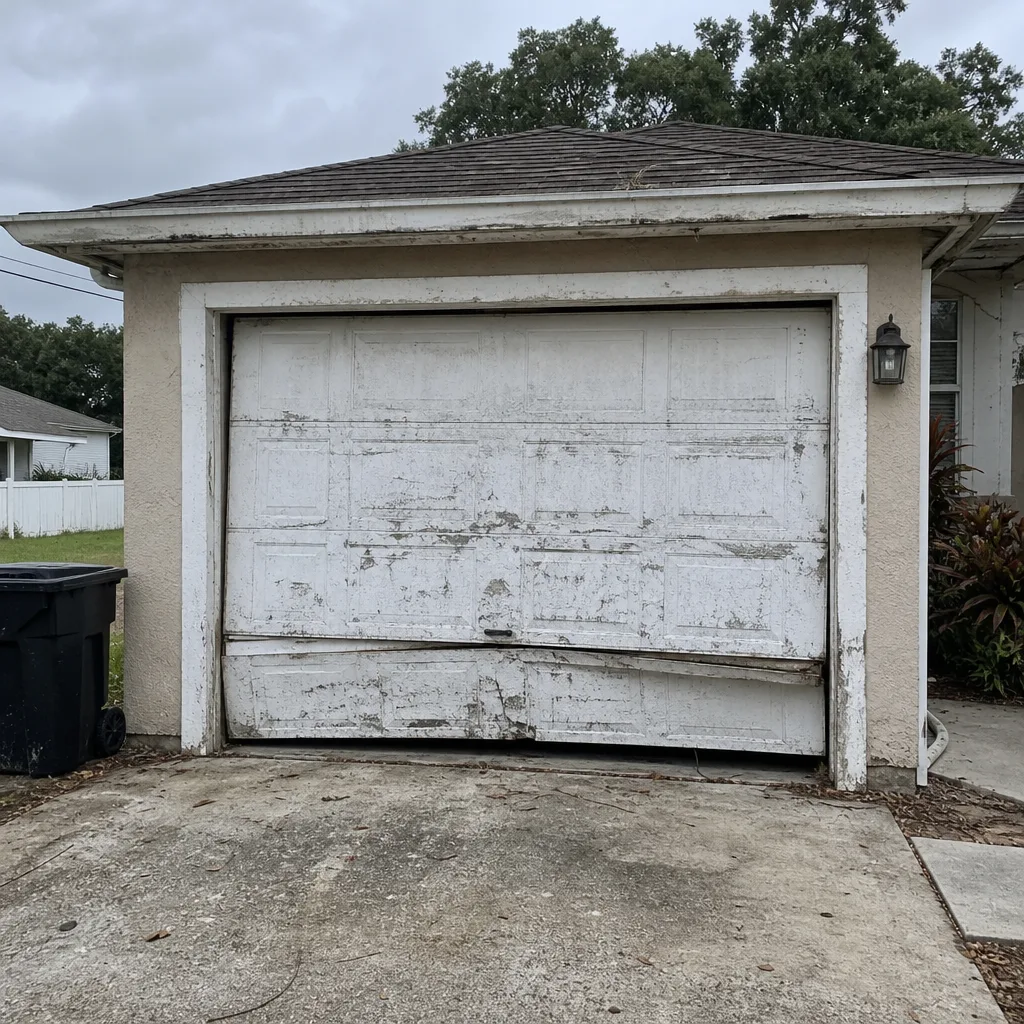
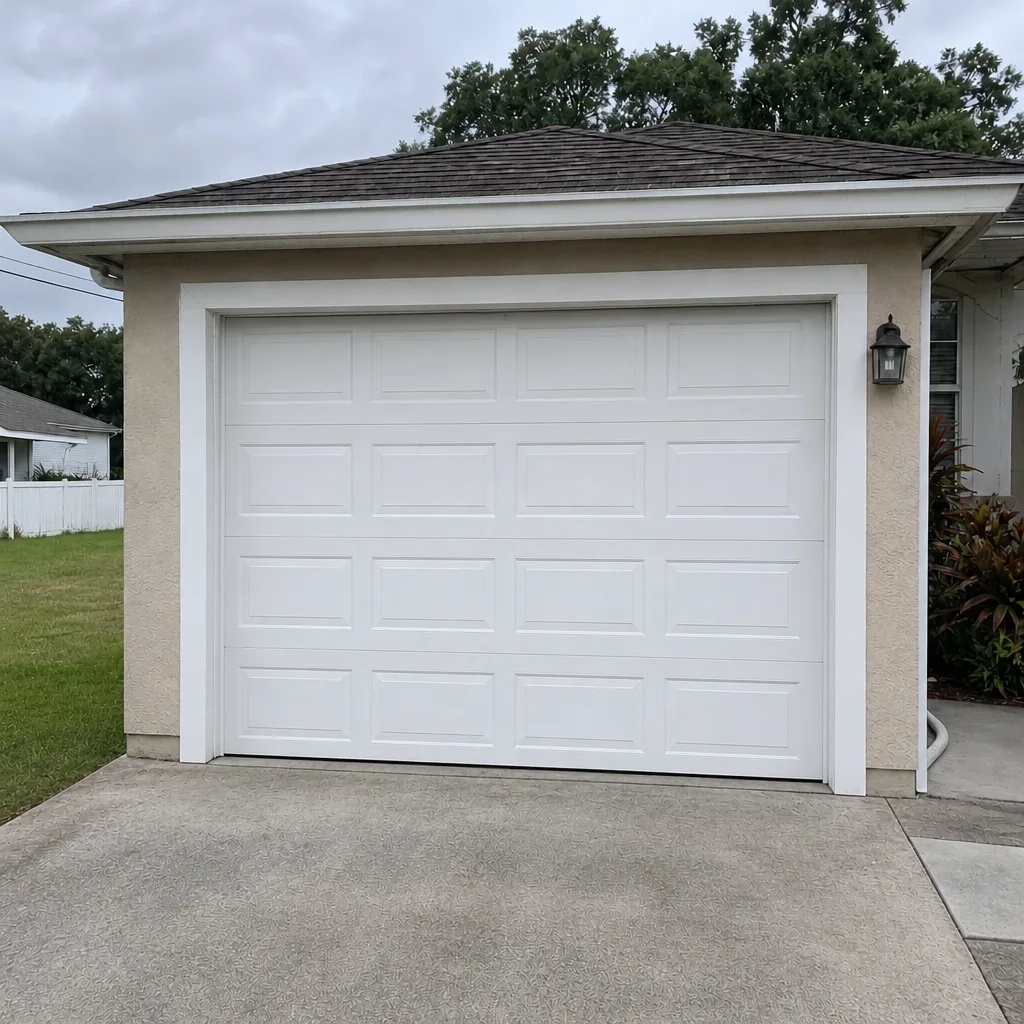
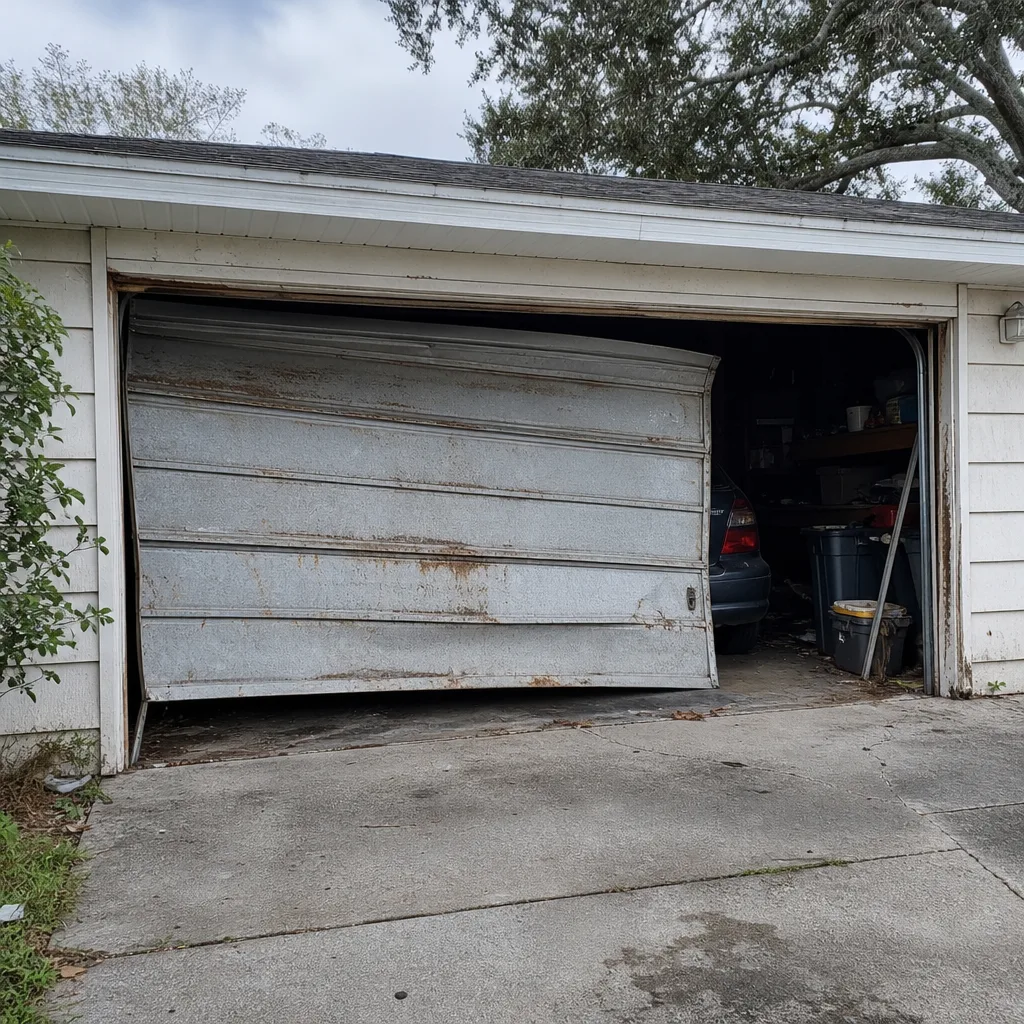
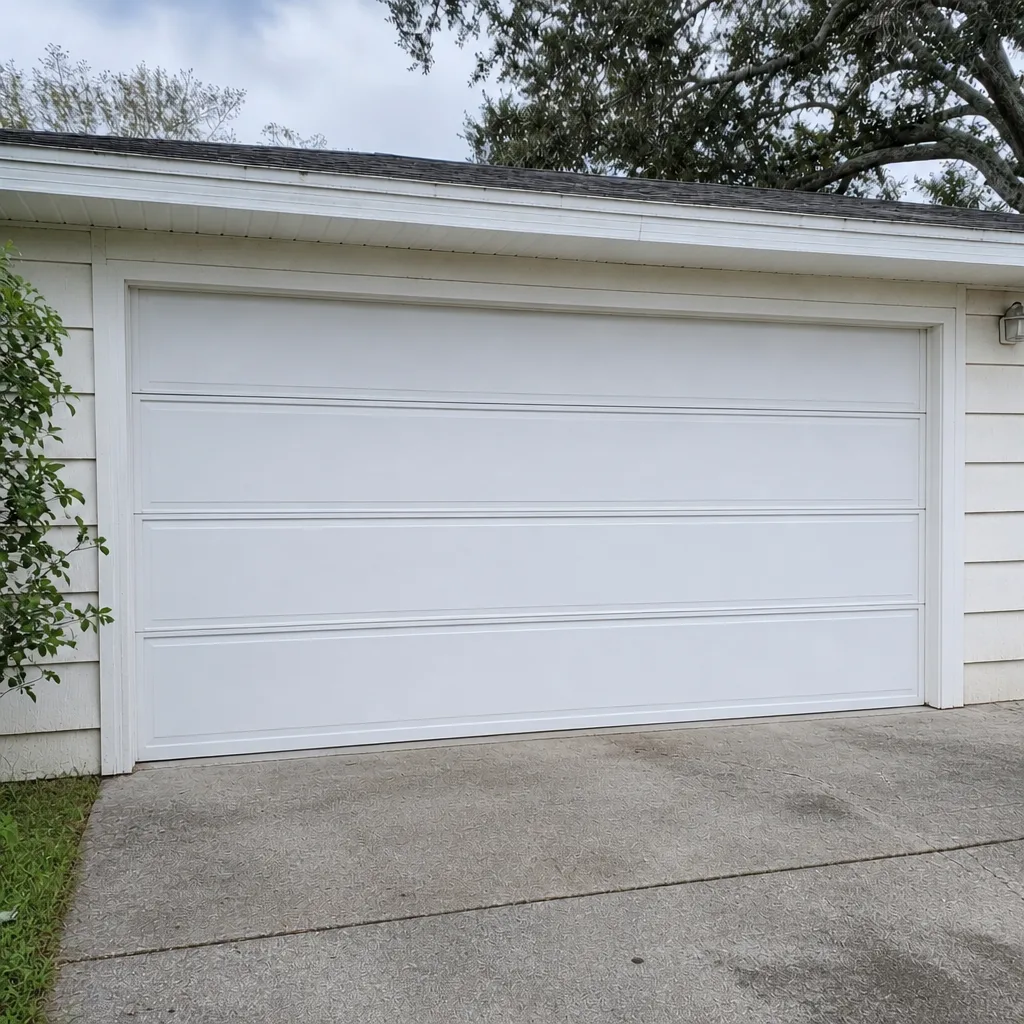
See the difference
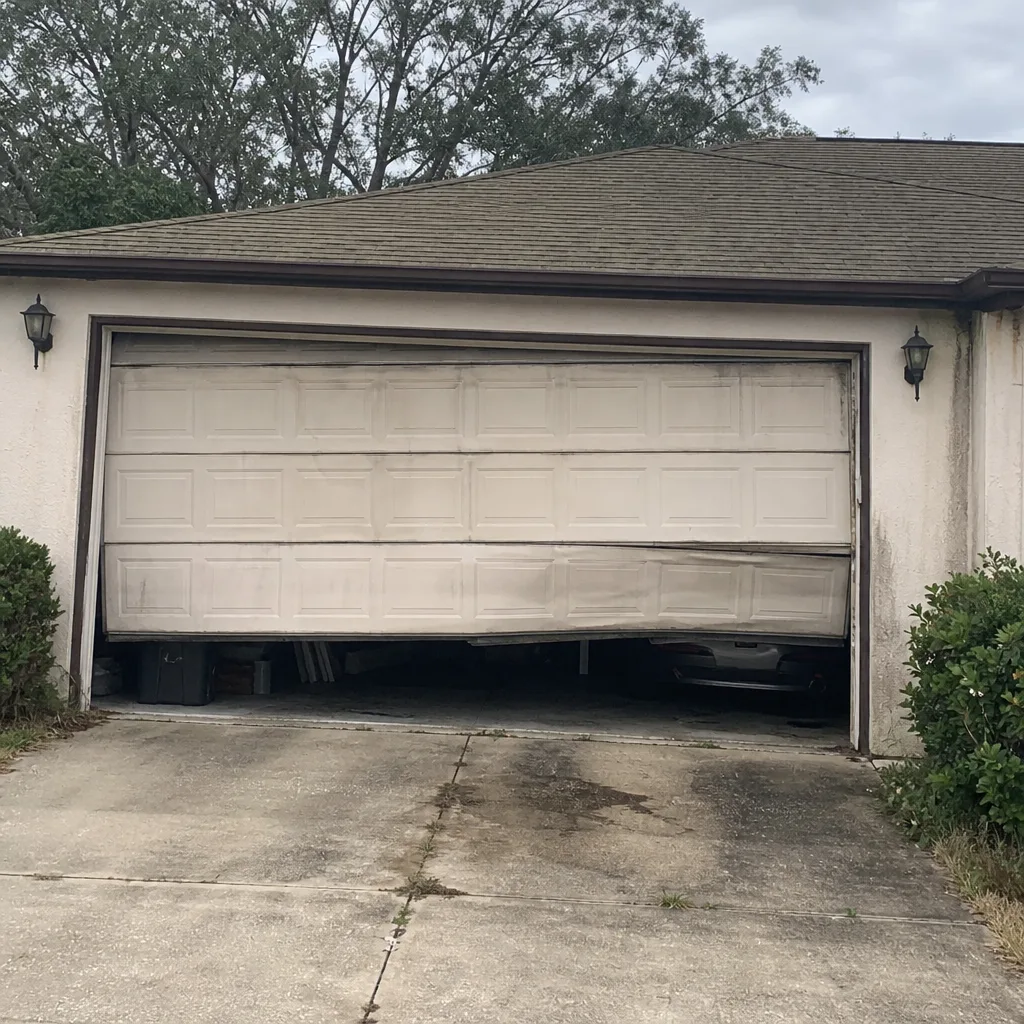 Before
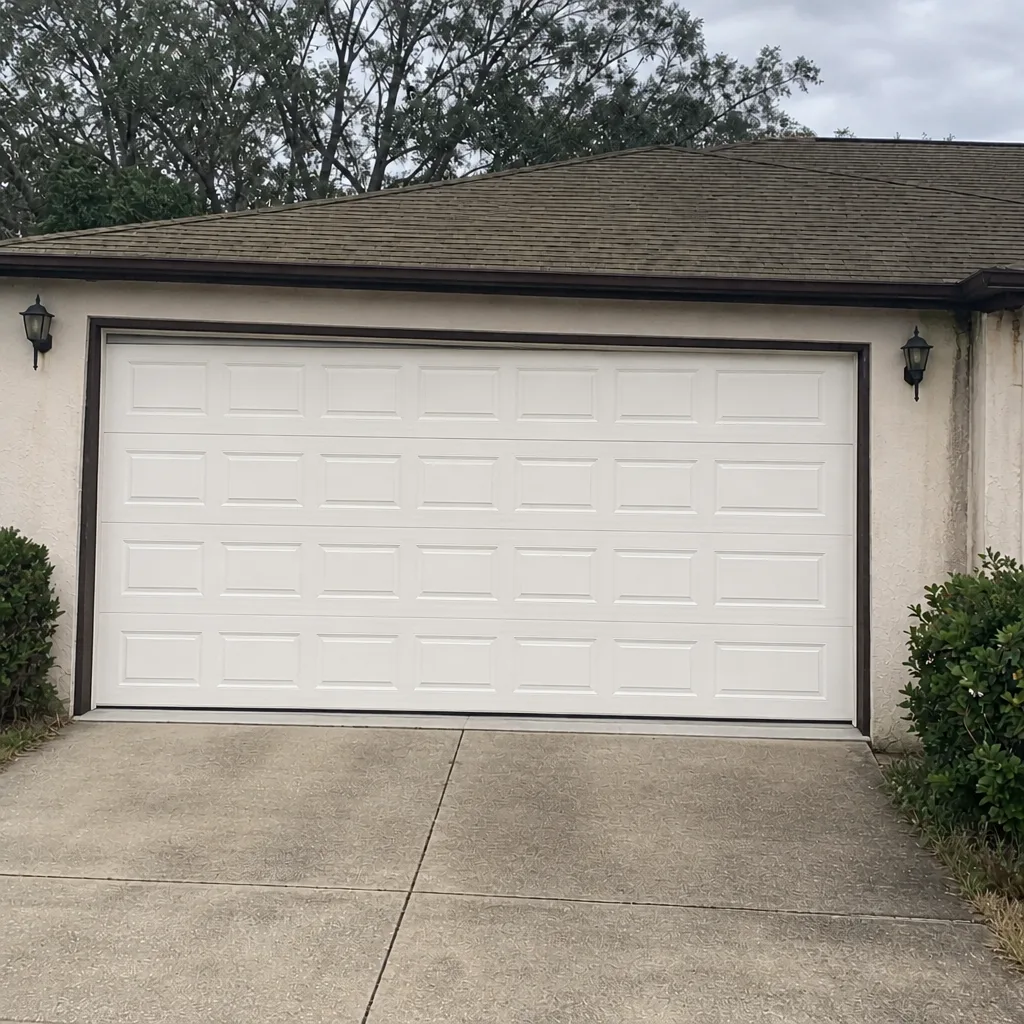 After
 Before
 After
 Before
 After
When to Call a Professional
Some garage door work is a homeowner check – wiping sensors, looking at tracks, taking photos, listening for changes. Some of it isn’t. Springs, cables, and anything involving high tension on the door are the parts you leave to a trained technician. If the spring shows gaps, rust, or a stretched appearance, if the door feels heavier than it used to, if a track is visibly bent, or if the door has taken an impact you’re not sure about, call us. If the opener is struggling, the safety reverse isn’t working, or the door won’t close, call us. Our technicians have up to 12 years of experience with high-tension hardware, and the local pro is licensed and insured as their state requires. Bradenton Garage Door Repair Pros offers free estimates in Bradenton – call (844) 941-2329. The price is quoted and agreed before any work starts, and if your situation is urgent, we offer emergency service for doors that are stuck, off their tracks, or won’t close.
Frequently Asked Questions
The two best windows are late May before hurricane season opens and December through March during the dry season. The May check catches anything the door needs to survive the storm months, and the dry season is the right time for proactive spring replacement, seal work, and opener service. A quick sensor and track check after any big storm is worth adding too.
Yes, wind-driven rain and flying debris can damage the door even in storms that don’t make landfall nearby. The most common damage we see is knocked-out tracks, impact dents, and panel separation at the seams. A door that looks fine but was pushed or hit should be inspected afterwards, because the hidden damage is what shows up weeks later as a failure.
The red manual release cord disconnects the door from the opener so it can be opened by hand during a power outage. Don’t pull it during a storm unless the power is out and you need to get a car out. A disconnected door under weak springs can drop, and pulling it while the door is under load is an unnecessary risk.
A door that reverses for no obvious reason is usually a photo-eye sensor that’s either dirty or slightly out of alignment. Bradenton’s spring pollen settles on the lenses and scatters the beam, and the opener reads it as an obstruction. Wipe both lenses with a dry cloth, check that they point at each other, and test the safety reverse. If it’s still reversing, call us – the issue may be opener-side.
Look for visible gaps in the spring coils, rust streaks, or a door that feels heavier than it used to. A spring that’s failing may also cause the door to lag on one side or come down harder than normal. Don’t touch or adjust a spring yourself – high-tension springs can cause serious injury. Call a specialist and let them assess it.
Yes, the local pro is licensed and insured as their state requires. Our technicians have up to 12 years of experience, and they work on the brand already in your garage – from LiftMaster and Chamberlain to Genie, Clopay, Amarr, Wayne Dalton, Craftsman, and Raynor. Call (844) 941-2329 for a free estimate.
The Bottom Line
Bradenton’s garage door calendar is built on two seasons, not four: a May prep push before hurricane season and a December-through-March window for the proactive work that keeps the door out of trouble. Sensors and seals need attention during spring pollen, springs and hardware need a look during the humid summer, and the door needs a full inspection after any storm that pushes through. The homeowner checks – wiping lenses, looking at tracks, taking photos – are worth doing. The high-tension work is worth calling in, because springs and cables are the one part of the system that can hurt you. If you’re not sure what your door needs this season, a free estimate will tell you, and the price is quoted and agreed before any work starts.
Call Bradenton Garage Door Repair Pros at (844) 941-2329 for your free estimate. We handle everything from a seasonal check-up to a full spring replacement or new door installation, and we work on the brand already in your garage.
Written by the team at Bradenton Garage Door Repair Pros.